
Digital Learning
Connecting Knowledge with Technology.
Preparing Students for Tomorrow.
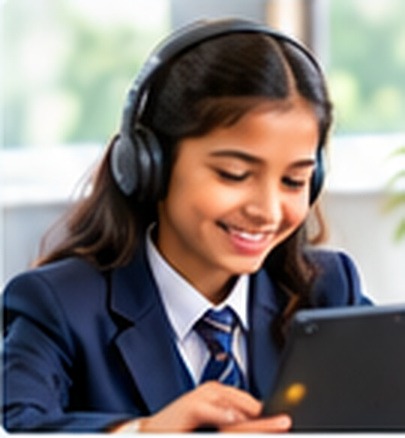
Our approach combines the value of teacher-guided learning with appropriate digital tools and resources. We aim to help students become confident, creative, and responsible users of technology while keeping meaningful learning, human interaction, and academic understanding at the heart of education.
We see technology as a tool to support teaching, encourage exploration, and enrich the learning experience. Digital resources are used purposefully alongside classroom discussions, practical activities, reading, writing, and collaborative work.
Our approach encourages students to ask questions, research information, evaluate ideas, create digital content, and communicate their learning. Teachers remain central to the process by guiding students, explaining concepts, providing feedback, and helping them use digital tools meaningfully.

-
Interactive Classroom Learning
Digital presentations, educational videos, visual demonstrations, and interactive resources can make lessons more engaging. These tools help students explore concepts, connect ideas, and participate actively in classroom activities.
-
Digital Research & Information Skills
Students are encouraged to explore age-appropriate digital resources, locate relevant information, compare sources, and develop research skills. They learn that responsible digital research involves checking information carefully, respecting intellectual property, and using reliable sources.
-
Creative & Collaborative Projects
Digital tools can support presentations, multimedia projects, research assignments, and group activities. Students have opportunities to organise ideas, express creativity, share their work, and collaborate on meaningful tasks.
-
STEM, Coding & Robotics
Technology-based activities can introduce students to computational thinking, logical reasoning, coding concepts, robotics, and problem-solving. Through guided exploration and practical challenges, students can develop an understanding of how technology is designed and applied.
-
Independent & Self-Directed Learning
Age-appropriate digital resources can help students revisit concepts, practise skills, and explore topics of interest. With teacher guidance, students learn to set goals, manage tasks, and take greater responsibility for their learning.
Age-appropriate experiences for every learner.

Nursery to PP2
For young learners, digital resources can provide carefully guided, age-appropriate experiences through stories, sounds, visual demonstrations, and interactive activities. These experiences complement play, movement, hands-on exploration, and face-to-face interaction, which remain essential to early childhood development.

Grades 1–5
Students begin developing foundational digital skills through guided educational activities, interactive lessons, digital storytelling, simple research tasks, and introductory technology experiences. Emphasis is placed on curiosity, creativity, basic digital awareness, and safe technology habits.

Grade 6-10
Older students can use digital resources for research, presentations, subject-based projects, collaborative assignments, STEM activities, and more advanced information skills. They are encouraged to analyze information, create meaningful digital work, and use technology responsibly to support academic learning.
Digital literacy involves more than knowing how to use a device. It includes understanding how to find, evaluate, create, and communicate information effectively and responsibly.
Through appropriate learning experiences, we aim to develop:
- Digital confidence and technology awareness
- Research and information-evaluation skills
- Critical thinking and problem-solving
- Creativity and digital content creation
- Online communication and collaboration
- Responsible digital citizenship
- Awareness of privacy, security, and online safety
- Adaptability and lifelong learning
We believe digital learning must be supported by safe, balanced, and responsible technology habits. Students need guidance on protecting personal information, creating secure passwords, recognising inappropriate content, communicating respectfully online, and understanding the importance of digital privacy.
We also encourage students to balance screen-based activities with reading, physical activity, practical experiences, creative pursuits, and face-to-face interaction. Technology should support wellbeing and learning, not replace the experiences that help children develop socially, emotionally, and physically.
-
Teachers as Guides in Digital Learning
Teachers help students make effective use of digital resources by selecting appropriate tools, designing meaningful learning activities, and encouraging thoughtful participation. Their guidance helps students distinguish useful information from unreliable content and apply technology to real learning goals.
By combining professional teaching with suitable digital resources, we aim to create learning experiences that are engaging, purposeful, and supportive of student development.
-
A Partnership Between School and Parents
Parents play an important role in helping children develop healthy digital habits. Communication between school and home can support age-appropriate device use, online safety, balanced screen time, and responsible participation in digital activities.
Together, teachers and parents can encourage children to use technology with curiosity, care, and confidence while maintaining a healthy balance between digital and offline learning.